Showing posts with label Lifting. Show all posts

Friday, March 10, 2017

4 Interesting Facts about Mind-Body Connection


The body and mind are intimately intertwined. We must always look at the bigger picture. Despite Western medicine’s attempt to further break the body up into distinct “parts,” everything is connected. Your stress at work and your shoulder pain are absolutely related. Your toxic relationship and your sinus infection is likely the result of your body’s symbiosis. Emotional stress manifests itself physically, and, conversely, physical pain impacts our emotions.

“Muscles” are just used for classification purposes, but that is not exactly how your brain works. You’re never just using one muscle at a time, and the same thing goes for your organs: nothing works in solitude, but rather, your body is a symphony.

Everything is originated in your brain. The brain is responsible for the function of all bodily functions (heart beat, digestion, respiration, etc.), and it also controls your perception. Thus, it would be foolish to consider pain without first understanding the cognitive processes behind it
  1. Research suggests that thinking about contracting a specific muscle is beneficial for improving muscular hypertrophy. A study of 18 resistance-trained men found that "individuals can increase triceps brachii or pectarilis major muscle activity during the bench press when focusing on using the specific muscle at intensities up to 60 % of 1RM." Essentially, thinking about activating a muscle can increase its activation at lower intensities.
  2. A history of injury to a certain area can perpetuate symptoms, even after your body has healed. Pain and trauma form pathways in your brain. There's an adage that says "neurons that fire together wire together." This means that if a pathway of pain becomes familiar to you, it can be difficult to dissociate the two things. Let's say you tore your UCL in your elbow throwing a baseball. You may still experience pain when throwing, even long after the tissue has healed, because your brain associates throwing with danger.
  3. You can improve on a skill using mental imagery. "Vandell et. al. reported that groups of subjects who mentally practiced basketball free throws or dart throwing demonstrated improved skills similar to those who physically practiced the task. The [mental practice] and [physical practice] groups improved 23% and 24%, respectively, as compared with no improvement in a control group that did not practice either task," mentioned Warner and McNeill. That means that the group who practiced a skill using mental imagery alone had nearly the same level of improvements as did the group using physical practice!
  4. Mental practice can improve balance. Fansler et. al. tested 36 elderly female subjects. Women were randomly assigned to one of three groups: non-sense+physical practice, relaxation+physical practice, or ideokinetic facilitation+physical practice. The final group "showed fewer subjects with negative change and more subjects with greater than 100% improvement." Effectively, the combination of mind-body awareness along with physical practice elicited significant improvements for the subjects. "This improvement in balance, which is a fundamental component of human movement, suggests that [ideokinetic facilitation] has promising usefulness in health care." Perhaps this study could be expanded into other areas, as well!
Wim Hof, a dutch man known as the "Ice Man" has been able to achieve incredible feats using meditative breathing. He regularly goes for dunks in freezing cold water, hikes frigid mountains in only his shorts, and has even demonstrated control over his autonomic nervous system. If you haven't heard of this guy, I recommend watching this video and reading more about him! He's a pretty incredible and inspiring man.

There's still much research to be done on the concept of mind-body connectivity. I believe that with a strong mind, we can build a strong body. We cannot achieve what the mind doesn't believe. Incorporating mental imagery into your routine might just be the change you need to break through your training plateaus!

Friday, January 6, 2017

A Case Against Box Squats


The box squat is ubiquitous in both high level strength and conditioning facilities and Globo gyms. While a lot of coaches and trainers tout the box squat as being beneficial for "explosiveness" and overall strength, I am here to dispute its efficacy, and highlight some of their potential drawbacks.

I am guessing that some of you are already prepared to jump on me for questioning a movement that is so widely utilized, but before you do so, give this article a read. If you still vehemently disagree with my claims, then I'm always happy to hear other opinions.

One of the biggest underlying detriments to using the box squat, in my opinion, is the lack of "biomechanical transferability" to a traditional back squat (specifically high bar); by this, I mean that the movement is quite different in terms of joint angles. One cue you will often hear in the box squat is something to the effect of "push your butt back." Now, this may also be applicable to a powerlifting low bar squatting style, but it is contraindicated on a high bar, Olympic style squat. You'll notice that in this diagram, that the low bar back squatter (on the left) sits his hips back farther, and his shins are closer to vertical, whereas the high bar squatter on the right sits more upright, and the knees track in front of the toes.

The cue "sit back" leads to the athlete maintaining a shin that is almost completely vertical and ends up in a position that would not otherwise be sustainable. Try to do a high bar or low bar squat by pushing your hips back to an extreme degree like some coaches advocate on the box squat–you will likely fall over, because that is not the natural way to descend the hips. Take a look at this guy in the photo. Squatting this way sans box would be very difficult.


Aside from the altered mechanics of the box squat, this movement often decreases the standard range of motion. The only time I would ever prescribe box squats for a client is if he or she were having difficulty achieving or gaging depth on the movement. In this case, a box or a medicine ball can give the client a target or a standardization for depth. Over time, one should progress to a lower box, and eventually eliminate it altogether. If you're comfortable with the movement, then you should always aim to maximize your range of motion with great technique, rather than decrease it.

Similarly, a lot of people tend to get lazy on the box. By this, I mean that the lifter will fully relax and disengage in the middle of the movement. This is not only disadvantageous (as it would never happen in a normal back squat), but it is also dangerous. Now, the lifter has to recreate tension as they stand. There is a tremendous risk of back injury for this reason. If you do choose to use box squats in your training, you should simply tap the box and then quickly rebound, rather than sitting completely.

While some strength coaches praise the box squat for its ability to develop explosiveness out of the hole, I prefer two other squatting variants: paused squats and jumping barbell squats. Both of these movements are, in my experience, far superior. The paused back squat allows the lifter to achieve full depth and build concentric speed, and the jumping barbell squat teaches that rebounding, plyometric power that is desirable in most sports. I prefer to keep repetitions per set lower (<6-8) for both movements, because the lifter can focus on perfect technique. For the paused squats, it is ideal to use a weight that will be challenging, but will not slow down your ascent. For example, if you're grinding to stand up with the weight, you've gone too heavy. Speed trumps weight here. Weight should be between 20-30% of back squat 1 repetition maximum for the jumping barbell squats. Heavier weights won't allow for a quick rebound.

Overall, while some prefer to program the box squat, I think it is limited in its practical application for most people. Not only does it reinforce improper mechanics, but it also could result in injury. Try different squatting variations to stimulate the same effect.

Friday, October 21, 2016

Will Creatine Help You?


Creatine is, without a doubt, one of the most popular supplements touted by bros on the market today (at least that one can legally use). Bodybuilders and other athletes use it to improve work capacity and increase size. In fact, Froiland et. al. found that about 37% of NCAA athletes take creatine. Before you start scooping heaps of creatine into your protein shakes, however, it's important to know how it works, and also what it does and doesn't do.

There are seven different types of creatine supplements: creatine monohydrate (the most popular form), tri-creatine malate, micronized creatine, liquid creatine, conjugated creatine, buffered creatine, and ethyl ester. For the purposes of brevity of this article, though, I will only discuss creatine monohydrate supplementation.

Naturally produced in your liver, pancreas, and kidneys, creatine is transported to your muscles through the bloodstream. Creatine is also sourced from meat and fish, or, obviously, supplementation. Along with a compound known as adenosine triphosphate (ATP), phosphocreatine is the primary energy source for all anaerobic activity (shorter activities that don't require much oxygen).


With creatine supplementation, you have more ATP-PC stores, and, thus, you're able to improve your work capacity! Creatine is effectively giving you that extra "boost" in your workout, so if you were only able to perform 4 repetitions on your bench press at a given weight, using creatine supplements, you'll ideally be able to do 6 or more repetitions. In summary, creatine isn't a miracle supplement that you take and wake up looking like Arnold and lifting like Mark Henry, but, rather, it's aiding you in getting more work done than you would've been able to do otherwise. An increased work capacity allows you to increase volume (repetitions) at a designated intensity (weight), which can result in an increase in muscle mass and strength as a byproduct.

What does the research show?

For one, Rawson et. al. noted that weightlifting performance and muscle hypertrophy increased considerably in subjects using creatine:
Although there is considerable variability in the increase in muscle strength and weightlifting performance in subjects ingesting creatine during resistance training, subjects ingesting creatine experience on average an 8% greater increase in muscle strength (20 vs. 12%) and a 14% greater increase in weightlifting performance (26 vs. 12%). Additionally, untrained subjects experienced a larger increase in muscle strength following creatine supplementation plus resistance training than trained subjects (31 vs. 14%).
They both reviewed 22 different studies on the supplement, and those were there collective conclusions. The review also considered possible gender disparities, and didn't find a substantial difference in response between men and women:
One group has reported that men and women experience similar improvements in exercise performance following creatine supplementation (51), but that women show a lesser increase in lean body mass (32) and no reduction in protein breakdown (34) following creatine supplementation compared with men.
In another study, Becque and his colleagues tested 23 male subjects with one or more years of training experience. The experimental group ingested 5 g of creatine, while the control group ingested a placebo drink with sucrose. One of the most interesting findings of the study was that "body mass was significantly greater for [the creatine group] than [the] placebo [group] at pretest and post-test." The experimental group also noted a larger increase in arm flexor (biceps brachii) strength than did the control group.


Similarly, Volek tested 19 resistance-trained men over the course of 12 weeks. Towards the end of the study (weeks 5-8), the experimental (creatine) group performed more volume in the bench press than their control counterparts did. There were no noticeable differences in squat volume. The 1 repetition maximums for all subjects, but more significantly in the creatine supplemented subjects on both the squat and the bench press. The creatine subjects saw a larger increase in lean muscle mass, as well (5.8 kg versus 1.3 kg in the placebo group).


With those things in mind, here are a few final points:

  • For optimal digestion of a creatine monohydrate powder, mix it with fruit juice, as it has been shown to increase absorption. 
  • The use of loading phases are often disputed. It is unlikely that it is necessary. So long as you're getting around 3-5 grams per day, you should still reap the massive benefits of creatine monohydrate.
  • Timing doesn't seem to matter much, either. Studies have found benefits to both pre and post-workout consumption. Unfortunately, no study to date has compared the efficacy of pre and post-workout creatine intake.
  • Studies have indicated that creatine may cause gastrointestinal distress in some, so that's an important side effect to consider.
  • Despite myths indicating the contrary, creatine has not been linked to liver or kidney problems in the short term or the long term.

If you want to do some more reading into these studies, I've listed them in the works cited below. Overall, the majority of the literature seems to lean in favor of creatine for both hypertrophy and for strength gains. In fact, it's tough to find studies that contradict those findings.

With supplements, it's always a good idea to experiment and see what works best for you. I've tried a number of different products on the market, and I'm constantly making adjustments accordingly. Creatine monohydrate just may be the missing link in your training plateau!

Friday, April 15, 2016

Practical Uses of Variety in Training


A lot of my readers have been asking me about programming. This week, I was luck enough to have my friend Steve write a guest post for me. Steve Bare is a professional strength coach (CSCS, USAW) and competitive weightlifter. His experience includes work in the private industry and an internship at the Olympic Training Center in Chula Vista, California. He now coaches at a high school, where he is thankful to work with a huge number of adolescent athletes, and give them all a great start in strength training. You can occasionally catch him writing on his coaching blog, BareStrength.


Friday, April 8, 2016

Contrast Training: How it Works, and How to Use It for Impressive Gains


I'm gonna let you in on a little training secret: it's called contrast training. It's used by elite athletes to improve power output, and the results are pretty impressive. Contrast training, also known as PAP (post activation potentiation), is the pairing of heavy strength exercises and explosive or plyometric exercises. If you want to get the most out of your training, PAP is the way to go.

Try contrast training, and you'll learn to levitate like this dude.
PAP is especially useful for athletes looking to enhance power output. Jumpers, weightlifters, sprinters, and shot putters are a few such athletes who can reap big benefits from this type of training. The benefits are not just limited to elite athletes, however, and can be used safely for intermediate lifters (with 2+ years of training experience).

In essence, contrast training is exciting the nervous system, and improving motor unit recruitment acutely. The more fibers activated on any given movement, the greater the benefit. To quote Roxanne Horwath and Len Kravitz (and no, not the "Fly Away" Lenny Kravitz), "The greater the muscle activation, the greater the duration of calcium ions in the muscle cell environment (referred to as sarcoplasm) and the greater the phosphorylation of the myosin light chain protein (Rixon, Lamont, Bemden, 2007). As a result, faster contraction rates and faster rates of tension develop."

One study done by Chatzopoulos Et. Al. found that heavy resistance training helped acutely improve 10 and 30 meter sprinting times. The sprints were performed after a 5 minute window of resistance training. The participants (young male athletes between the ages of 18-23) performed 10 single repetitions at 90% of their 1 repetition maximum back squat. After only 3 minutes of rest, however, the sprinting times did not increase. It is important to mention that adequate rest seems to be a very important factor here.

Here's a great list of the benefits of PAP, in the words of Bret Contreras:

  1. Short-term enhancement – May increased neuromuscular performance in an actual competitive event through PAP
  2. Chronic adaptation – May increase training effect using PAP in training which would result in increased Rate of Force Development (RFD)
  3. Increased workout density – Combined training allows for more activity with less actual resting time which is critical if total workout time is limited
  4. Increased dynamic transfer – By combining biomechanically similar activities athletes may groove more efficient neural patterns by learning to perform the lift in a manner more specific to the athletic activity
  5. Increased work capacity – By increasing workout density athletes will increase their work capacity which is characterized by high levels of average power output over an interval (which I call power endurance)
Now that you get the gist for how it works, you may be wondering how you can use it and reap the benefits. Like I said, we want to pair heavy lifting with fast, explosive movements. You want to wait about 30 seconds after the strength movement to execute the explosive, plyometric movement. Rest for about 3 minutes or longer in between sets. The following list provides some pairing options for strength and power movements.
One thing to remember is that you want to keep total volume (reps per session) low. We're not trying to accumulate 100 reps, or anything crazy. This is about intensity, not volume. I'd suggest doing no more than 5 reps of each movement, and 5-6 sets should be enough!

If you're looking for a new way to spice up your strength training routine, contrast training may be just what you need!

Friday, March 4, 2016

Changing up Your Rep Scheme


If you seek out nearly any fitness-related website for information regarding rep schemes, you'll see something like this:
  • For size, do 3-4 sets of 8-12 repetitions
  • For strength, do multiple sets of 5 of fewer repetitions at a heavy weight
  • For muscular endurance, do sets of 20 or more repetitions
While this is, generally satisfactory advice, I want to delve a little bit more into this topic.

First of all, genetics play a big factor in hypertrophy (muscle growth). Everyone responds differently to certain types of training. Every person has a different distribution of type I (slow twitch) and type IIa/b (fast twitch) fibers. Renowned strength coach Charles Poliquin notes, for example:
"It should be noted that the triceps are more universally fast-twitch dominant, while there is more variation in fiber-type composition in the biceps. This example demonstrates why training programs should take each individual’s personal characteristics into consideration. This is true in terms of both exercise selection and especially the volume and intensity of the workload, since individuals and specific muscles that are either fast-twitch or slow-twitch dominant will respond differently to a given level of volume and intensity. Understanding what you are dealing with will make your training programs significantly more effective."
Put simply, if someone has more fast twitch fibers in a given muscle, then he may need to train a bit differently than an individual with a higher percentage of slow twitch fibers in that muscle. Muscles with a greater percentage of fast twitch fibers benefit from fewer repetitions per set, whereas muscles that are predominantly slow twitch will grow easier with the use of high volume. This also means that there's a great deal of variance in the ideal amount of repetition volume depending on what body part you're training.

While 8-12 repetitions will help build mass, it's certainly not the only method. In fact, it's ideal to change up your split if you've hit a plateau.

If you're gonna bench press to failure, just please, don't follow his example.
One method I like to use on certain movements is to go to failure. There is no prescribed number of repetitions, necessarily, but you want to keep repeating the exercise until your muscles give out and can no longer move the weight. This is a great way to induce strength gains. Nóbrega and Libardi note that "when it comes to trained individuals, evidence shows greater increases in muscle strength after [high intensity resistance training] performed to muscle failure compared to no failure." Some people avoid missing lifts, but the evidence shows that these repetitions recruit more muscle activation, and, thus, lead to greater adaptation. To apply this, you can put something like 85% of your best back squat on the bar and do one AMRAP set (as many reps as possible) to failure. Make sure you have a spotter nearby or you know how to properly miss a squat. It should also be noted that you do not need to do this frequently (perhaps only once or twice per mesocycle), as this type of training is quite stressful for the central nervous system.

You can also utilize this concept for muscular hypertrophy. "Recent studies have pointed muscular failure to be an important factor in order to maximize adaptations when RT is done at low intensities (LI-RT), " continued Nóbrega and Libardi. Try to use really light weights on your next set of biceps curls and go until you can no lift the dumbbells.

Additionally, while many "fitness gurus" have deemed high repetition sets as inefficient for muscle growth, research has shown that extremely high repetition training is, indeed effective for muscle growth. The conventional understanding is that sets of 20 repetitions or more are to be used for endurance of the muscle. Schoenfeld et. al. showed us, in his 2015 study, that 25-35 rep sets can work just as well as the traditional 8-12 rep sets we all know and love.

Schoenfeld drafted 24 experienced male trainees for his research. "Training was performed 3 times per week on nonconsecutive days, for a total of 8 weeks. Both [high load] and [low load] conditions produced significant increases in thickness of the elbow flexors (biceps), elbow extensors (triceps), and quadriceps femoris (9.3 vs. 9.5%, respectively), with no significant differences noted between groups." While this study defies the industry standard, it demonstrates that you can utilize many different intensities and volumes to elicit the same training effect.

Finally, I want to talk about sets. Most programs seem to cling to the magical 3-4 range. Every once in a while, you can try 5 or more sets. Why stop there? Sometimes I'll even do 10 sets of 10 (100 total reps) of a given movement. This is a great way to increase total workout volume and stimulate hypertrophy. You don't necessarily need to do 10 sets of every single accessory exercise, because you'd spend a full day in the gym, but it's a great way to finish off an intense session.

Friday, February 19, 2016

Nate's FREE Beta Squat Program!

When you have more plates on the bar than you have fingers, you know you're strong.
My friend Nate is back for another guest post. You may remember his last post for me about proper breathing for the squat. Now that you know how to breathe on the lift, this program will help you get stupid strong squats. Nate is a competitive 198/220 Powerlifter and trainer under the NSCA who is currently pursuing his CSCS. Nate has been lifting for a little over 2 years and boasts an impressive 535 pounds recently in the gym. He is currently chasing 600+ pounds, weighing 198 himself.


FOREWORD: One of the things I want to accomplish as a trainer/coach is to give back and to help people improve themselves–that’s really it. I’ve tried to commit myself to the processes involved in learning and applying the things that I’ve learned to allow others to push their limits and achieve their goals: that’s the reasoning behind this program.

Over the past year-and-a-half I’ve done a lot of my own programming as well as writing things up for friends to get practice with writing programming for different people. I sat down with some of the things that did and did not work and tried to design a 9 to 11 week Squat Program for beginners or intermediate lifters. I call it a “Beta” program because, let's face it, it’s a first attempt at writing something more serious and distributing it out to a lot of people to see how it works. With a large enough sample size, it gives me an idea of what things will generally work and what things generally won’t.

The added benefit is, I’m hoping, to help lifters hit PRs.

It should be noted that this is a very abridged cycle. I have not included accessories or recommended frequency for the bench press and deadlift. This is 100% squat focused.


THE PROGRAM

PREFACE: As you’ll see, I have days listed as Day 1/2/3 and later as Day 1 and 2. This is because not everyone can run a Mon/Weds/Fri split even though, in my opinion, that’s ideal. I know some people are in school, have work, have lives.

You’ll want at least one day of recovery in between squat sessions, especially for those who add accessories or who have other lifts or training to do other than purely squatting. For Phase 3, the ideal would be Monday and Thursday or Tuesday and Friday as long as 3 days of rest are taken between the days.

PHASE 1: Conditioning Phase 
The reasoning for the conditioning phase is simple: Conditioning. At percentages under 80%, the goal is to condition, practice, and build confidence as stepping stones for later cycles. If your goal is maximum weight, then spending some time to bring up your work capacity is not a bad idea. This will also be beneficial for people who have run extremely long, demanding programs or just need a good starting point instead of jumping into weight over 80%. As with the other phases, I’ve given you ranges on some days (example: 63-65%) because some lifters recover faster than others. You’ll see it in later cycles too. Always err on the side of training hard. However, the goal is to avoid missed reps and to aim for weight that you’ll be able to squat with the best technique.

This is the only phase with variations.

Week 4 in this phase is for lifters who feel they need a sort of break, usually the ones who are not used to conditioning and volume work or those who are just deconditioned to begin with. It is recommended to not take the taper for more experienced lifters.

**FOR LOW BAR SQUATTERS, DAY 2 IS A PAUSED HIGH BAR DAY. FOR HIGH BAR SQUATTERS DAY 2 IS A PAUSED FRONT SQUAT DAY.


PHASE 2: Accumulation/Volume
The point of this phase is to accumulate volume between about 70-85% of a persons 1RM. This will be the meat and potatoes. The goal of this phase is to build, build, build. Build strength, fearlessness under increasing load, and for the lifter to practice their competition (or stronger) squat. Day 2 in this cycle is built in to work on technique, power, and to have a day that is less demanding as the cycle increases without going into ridiculously low intensities that won’t benefit the lifter.


PHASE 3: Intensity
Plain and simple this phase is about putting some weight on your back with the confidence to push your comfort zone and create the confidence to break old PRs! For most lifters, they’ll likely be hitting weight/rep PRs weekly before the big max out. I recommend that the lifter have at least 3 days of rest on their squat between either day, and minimize deadlifting, to maximize recovery. Week 4 can be the taper from Week 4 of the Conditioning phase or for more experienced lifters, can max on the next week.


I hope those of you running this enjoy the program and see some gain from it! Thanks for reading and putting confidence in both myself and Arianna. I’d like to thank her too for allowing me to share on her page and for putting out all the information she does.

Now go crush some heavy squats!

Friday, February 12, 2016

Channeling the Mindset of a Champion

You can tell he's a beast, because his shirt says so.

This week, a friend of mine Russell is doing a guest post. Russell has been a strength & conditioning coach and personal trainer for the past 6 years, specializing in Olympic weightlifting for 3 of those years. Starting at a movement based gym in 2009, Russell learned the fundamentals of human movement, which carried him on to work with professional athletes, elite powerlifters, professional strongmen, and world class Olympic weightlifters. You can find Russell at his blog From the Low Hang or on Instagram @RedWhiteAndJacked.

Mentality is everything in fitness. Your attitude towards whatever you are doing will bleed through into the result.

A saying I hear often is that the hardest thing to do when trying to achieve a goal is to start, but I disagree. I believe the hardest thing to do when trying to get from A to B is to keep fighting towards where you want to be when you wind up at C, or D, or Q. No fitness journey will be without its hiccups, and how you respond to those moments is what will define your results.

Road bumps on your path can come in many shapes or sizes: anywhere from a slip up on your diet to an injury that sidelines you for an extended period of time. A lot of people have this idea that the most successful athletes or fitness professionals don’t ever hit hard times. I have worked people who range from elite athletes, to everyday people stepping into the gym for the first day and I can tell you with 100% certainty that they hit about the same amount of low points as anyone else does. The difference between those who are successful and those who aren’t is how they handle those low points.

“Concentration and mental toughness are the margins of victory.” -Bill Russell 

Just like with anything else, being mentally tough takes practice. Not everyone can start with the discipline and the mentality of an elite athlete. Here are some of the tips I’ve picked up along my journey that have helped me keep my head right:

  1. Prepare. Before you go to the gym, or even start your day, take a few minutes to get your head space right. Why are you doing what you’re doing? What goal are you trying to reach? Make sure you’re completely focused on your task or tasks. 
  2. Push. Push yourself and test your limits. Getting out of your comfort zone can be a challenging thing to do, but once you’re there you’ll see how amazing it feels to break down your own mental barriers.
  3. Get comfortable with being uncomfortable. Nothing worth having comes easily in fitness. That is why it’s such a great thing–because for everything you achieve, you that know you had to work to actualize it. Get comfortable with the idea that you’re going to hurt, you’re going to be tired, and you’re going to want to quit. As long as you can get past those feelings, you will succeed. 
  4. You can always do something. This is probably the biggest one for me personally. Too tired to get to the gym? Stretch. Injured your leg and can’t do your leg workout? An extra upper body day never hurt anyone. Super hungry and out of calories for the day? Make an enormous salad and take those calories out of tomorrow, chances are you won't even notice. No matter how dim it seems, there is always something you can do to get your closer to your goal, even if it is only by an inch. Don't make excuses.

Your mentality defines who you are, and a strong mind is the catalyst of a strong body. Practice these four skills to break plateaus and demolish your goals.

Friday, January 15, 2016

How Often Should You PR?


Adding more weight to your lifts is always exciting. Getting a personal record is tangible evidence that all of your hours of hard work have been effective. One thing that I've noticed, though, is that getting PRs can be addictive. By this, I mean that many lifters (especially beginners) get so caught up with testing their 1 repetition maximum, that they make it a regular ritual, constantly seeking to add extra plates on the barbell. While it can be tempting to constantly push your lifts to your physical limitations, it's not realistic to get a PR all of the time.

If you've ever followed a general or customized program, you've noticed that the majority of your training sessions included percentage work: some days were a bit easier, and other days were exceptionally grueling and torturous. Generally, the recommendation to increase your strength is to work at around 80% or higher several sets of 5 repetitions or fewer. Lighter days will allow you to practice movement repetition, while the heavy days are going to help you gradually build strength. Following a program allows you to lay down the foundation of strength, which will eventually increase your 1 repetition maximum.

Easy there, big guy.

Now, let's get into the basis of programming. A program is divided up into microcycles (usually 1-2 weeks), mesocycles (around 1-6 months), and macrocycles (which can be a year or longer). Ideally, the microcycles are planned with the bigger picture (mesocycle) in mind. For a competitive athlete, the amount of repetitions and intensity (weight used) per week and month is closely monitored to prepare for competition and hit target numbers.

There is no such thing as a "perfect" program. Rather, there are a million and one different modes of progression that will be equally effective for increasing strength levels. Two basic principles of programming are the linear and the daily undulating periodization methods:
  • Linear Periodization basically uses the same repetition scheme. For example you might do 4 sets of 5 repetitions for several weeks, then 6 sets of 4 repetitions for a few weeks.
  • Daily Undulating Periodization utilizes a different amount of sets and repetitions in each workout. An example would be to do 4 sets of 5 repetitions one workout, then the next workout you could do 2 sets of 8 repetitions at the same weight. The idea here is that you're constantly changing the rep scheme and the amount of weight used.
Both types of periodization provide results (although many studies have found that DUP is more effective).

Now, if you're following a specific program, you would most likely max out at the end of a mesocycle, once you've accumulated a decent amount of heavy training sessions. Allowing for several weeks in between 1 rep max attempts will ensure that you see the most amount of improvement.

In the meantime, you can get "rep PRs." This means that you will use a specific weight and you'll be able to perform more reps with it than you previously have. Let's say, for instance, that your best deadlift is 210 pounds. During a training cycle, you may be asked to use that weight for 3 repetitions. Now, the weight that you could only lift for 1 repetition is an easy triple. These "PRs" will still give you the same satisfaction, but can help you continue to make progress.

Ultimately, whether you're competing in a sport or not, planning your workouts is essential. If you want to continue to evade a potential plateau in strength, then you can't just walk into the gym and "wing it." Just going for PRs all of the time isn't going to get you stronger, and you mind end up disappointed.

There are a ton of free strength programs available on the internet, if you can't afford to pay a coach. For optimal progress, find a steady program to follow, rather than just making up your workouts on a whim. Be patient with adding weight onto the bar, and the numbers will come, in time.

Friday, December 4, 2015

3 Reasons Why Your Poor Mobility is Holding You Back


So many lifters are willing to complain ad nauseam about their lack of mobility, but very few of those people are willing to get up and fix it. Most individuals would prefer to deadlift heavy and get their heart rates up than spend about 10-15 minutes addressing their muscular imbalances and chronically tight areas.

What those people might not realize, is that their lack of mobility is actually sabotaging their progress. Instead, they'd rather just cut to the chase and dive face first into their workouts. They see the value in heavy lifting and pushing hard, but they neglect the accessory mobility work. It's easy to ignore, because the immediate pay-off might be minimal. They release a tight muscle once or twice, and don't make any lasting changes. Like strength training, though, consistency is the key. Doing a handful of stretches, some self-massage, and corrective exercises every few days will go a long way. Not only will you feel more loosey-goosey, but you may even PR your lifts just from adding some more range of motion to your joints!

If your overhead squat looks like that of the guy on the right, this article is about you.

Hopefully, this post will help knock some common sense into you and remind you to pay more attention to the corrective exercises. Here are three major reasons why your limited range of motion is holding you back from getting stronger:
  1. You can't get into the right positions. Movements like the front squat require a considerable range of motion. If your latissimus dorsi and pectoralis minors are tight, you won't be able to achieve an ideal position in the lift. No matter how many times a coach may say "elbows up," you just can't get them any higher. Your mobility is going to hinder your progress, because if you cannot keep your torso upright, then you won't be able to support a significant amount of weight in that position. I have met plenty of people who have ample strength, but stagnate on the clean, because their chest drops every time they catch the barbell. Their legs can support the weight without a problem, but their shoulders aren't having it. If these people did some work on the areas in question (pecs and lats), they would, undoubtedly, get an immediate PR on their cleans.
  2. Your potential for force production is limited. A muscle has to lengthen before a contraction. A length-tension of a relationship of a muscle explains that a muscle can produce an optimal amount of force at a certain length. For example, if you were to pick up a heavy book, you wouldn't do so with a fully extended elbow. Instead, you would probably bend your elbows a bit. Now, this continuum of ideal length is a balance. If someone is too flexible, force production will be limited, and the opposite is also true. If you are inflexible, the muscles are constantly partially contracted. Take a look at the diagram below of a muscle cross-section. The top model (a) cannot produce enough force because there is too much of an overlap, whereas option (c) can't produce optimal force because there's no overlap at all. Option (b) is just right: a little bit of overlap so that the muscles are at their ideal length for force production. So, if your hamstrings are "tight" you won't be able to produce true power on a sprint or a vertical jump, for example.
  3. Muscles are not firing in the proper sequence. If you're tight, you're more than likely compensating in ways you don't even realize. For example, if your ankle mobility needs some help, chances are, you're using the muscles on the medial portion of your leg (hip adductors) way too much, while the lateral muscles (abductors, gluteus medius, tensor fascia latae) aren't working enough. Every time you squat, lunge, or sprint, your mechanics are altered. Because your muscles are not in symbioses, this could mean a slower 400 meter time or a weaker back squat. Once the kinetic chain works as it is supposed to, your mechanics are more efficient and you might find that previously challenging movements are a bit easier!
Bodyworker Thomas Myers notes, "organismic movement and stretching – yoga‬, pilates, training‬, manual therapy – can help cells to their proper tension environment by relieving pressure or strain, and this results in better functioning all over." It's great to work hard and get stronger, but it's also important to give your muscles some love and alleviate tension in the body.

Ultimately, if you find that your performance has plateaued, perhaps it is time to finally work on improving your tin man status of mobility and join the supple side.

Friday, November 20, 2015

Stress Less to Lift More


You wake-up abruptly to the sound of your alarm clock. You press snooze, and then jolt up about 5 minutes later. Then, you scramble to find clothes to wear, brush your hair, brush your teeth and race out of the house to the car. While you're driving to work, you are constantly checking the time, getting exasperated by every stop light, ever car that's going too slow on the highway, and all of the detours that send you off route. When you finally make it to your job, just on time, you gasp a sigh of relief. Now you can begin to attack your "to-do list," which seems to be never-ending. Overwhelmed, you sit at your desk and take a big sip of coffee and get to work.

Does your day closely mirror the scenario I've described above?

No, I'm not a psychic, and I haven't been watching you on a hidden camera. So many of us, regrettably, spend our days on auto-pilot. Our heart rates rise along with our blood pressure, and we constantly complain that there aren't enough hours in the day.

Impending deadlines, hectic work schedules, familial responsibilities, and other stressors, can make it hard to allow yourself to relax and just let go of all of the craziness for a bit. With a little bit of meditation, however, you'll find that your workouts will improve, you will recover faster, and your daily life might just be a bit more manageable.

To understand recovery and stress, you need a little bit of background about the central nervous system. The chart above illuminates the hierarchy of the nervous system, but for the scope of this article, I'm going to talk about the divisions of the autonomic nervous system: the sympathetic and parasympathetic nervous systems.

The parasympathetic nervous system allows us to "rest and digest." When you are relaxing or meditating, your heart rate decreases. The PNS promotes recovery from stress and healing. At the other end of the spectrum, you have the sympathetic nervous system. The SNS is known for the "fight or flight" state. If you trip on the stairs, you're going to enter the sympathetic nervous system. Your heart rate elevates, your blood pressure increases, and your breath may become shallow and infrequent.

Many of us are quite familiar with the sympathetic nervous system, as we spend our days in frequent bouts of stress and anxiety.

Now what does all of this have to do with exercise? Well, as you know, exercise will do quite a number on your body. Your connective tissues take a beating, and they need time to repair so that you can attack your subsequent workouts. If we stay in the SNS, then, you're just not going recover optimally, if at all. In fact, you may even enter a state of catabolism (breakdown of muscle proteins). There's no sense in busting your butt in the gym if you're ultimately gonna stress away all your hard work, is there?

The diagram on the left talks a bit about Hans Selye's General Adaptation Syndrome. There are three stages: alarm, resistance, and exhaustion. Without adequate rest after repeated bouts of stress, one may reach the exhaustion stage, in which their performance regresses and they experience frequent injury. The body needs adequate rest in order to continue to train hard.

Here's an interesting study on high school swimmers: Jiang and colleagues had the athletes use meditation for recovery from intense training sessions. "Mood states, anxiety, and heart rate measures served as the dependent variables." They found that "meditation training as a mental warm down combined with a physical warm down are more effective to facilitate acute and long-term heart rate recovery, lower mood disturbance scores, decrease cognitive anxiety compared to just taking a rest after vigorous training and during the recovery period." Furthermore, "the experimental group demonstrated significantly lower scores than the control group in fatigue, depression, and anger." The meditating students had a more regulated mood, and they were recovering better from practices!

Another study, with Stults-Kolehmainen et. al. found that "in all analyses, higher stress was associated with worse recovery. Stress, whether assessed as life event stress or perceived stress, moderated the recovery trajectories of muscular function and somatic sensations in a 96-hour period after strenuous resistance exercise."

When considering the stresses felt by our body in exercise, we must also remember all of the other factors at play. If you're regularly working 70+ hour work weeks, or leading a lifestyle of stress, that will undoubtedly affect your workout recovery time. Every stressor accumulates a greater demand for recovery on the central nervous system, and dictates more time to return back to your baseline.

In my experience, meditation is a wonderful practice that can help you wind down after a tough day. Even 10-15 minutes a day will help you maintain your equilibrium and channel your inner Dalai Lama. Different types of meditation work for different people, but I prefer to just lay on my back, taking big, diaphragmatic breaths, and thinking positive thoughts. I let all of the negativity escape my mind, and remind myself not to let trivial things consume me.

Find a way to allow your brain to unwind after a tough day or tough week, and you may find yourself to be more at peace, less injured, and performing at an all time high. Allow your body to recover from all of the demands you have placed on it, so that you can get back to working out in half the amount of time!

As my father always says "don't write checks that your body can't cash!"


Friday, November 6, 2015

Up, Up, and Away (Exercises to Improve Your Vertical Jump)


I don't know if there's something strange in the air lately, but for whatever reason, I've gotten a lot of questions about how to improve a vertical jump. Some individuals are naturally gifted with hops, but for the rest of us who need to work hard to become more powerful, we have to add more explosive movements into our routines. If you want to sky like Jordan, you want to make sure you're using the correct exercises.

This could be you! (Don't quote me on that, though...)
So what determines how high you can jump? There are a couple of factors, but I'll name the most pertinent:
  • Muscle fiber distribution. Okay, so, in a nutshell, you have two different types of muscle fibers: type I and type II. Type I fibers (also known as slow twitch), do not fatigue easily. An endurance athlete will have well-developed type I fibers. Think: marathon runner. Type II fibers (also known as fast twitch) are split up into type IIa and IIb, and type IIb is the most easily fatigued. Someone with a higher percentage of type IIb fibers would be a 100 meter sprinter or a javelin thrower. Movements that are really short in nature require more speed and power. The fiber makeup of a muscle is determined by your genetics, but your training can help express and further develop either fast twitch or slow twitch fibers. If you train in an explosive, high-intensity manner, you are going to develop your fast twitch fibers to the best of your genetic ability.
  • Rate of force development. This builds on the first bullet point. Let's say you tried to do a power clean for the first time. Initially, while you're learning the movement, you will probably pretty slow moving under the barbell. Two years later, your bar speed will be significantly faster. Granted, you've also become more competent and confident with the movement, and you are stronger, but your rate of force development (RFD) has improved significantly. How quickly you can express force is incredibly important in working your ups.
Now that the bulk of the science-y stuff is out of the way, we can get to the meat of the article: here some exercises that will help you leap tall buildings in a single bound. (Actually, maybe don't try to jump buildings just yet...)
  1. Back squats (I have faith I don't need to post a video for this one...)
  2. Power cleans
  3. Power snatches
  4. Push jerks
  5. Depth jumps
  6. Jumping lunges
  7. Bulgarian split squat jumps
  8. Low hurdle hops
  9. Barbell jumping squats (no need to go heavy, here. Maybe 20-30% of your best squat.)
  10. Barbell pogo jumps (similar as the previous exercise, but not as much hip/knee bend)
Ideally, we want to train strength in conjunction with plyometrics. For example, a six week study by Adams and his colleagues found that individuals who performed strength and plyometric exercises, saw a greater increase in vertical jump than the strength group and the plyometrics group alone: 
"Examination of the mean scores shows that the [strength] group increased 3.30 centimeters in vertical jump, the [plyometrics] group increased 3.81 centimeters and the [strength/plyometrics] group increased 10.67 centimeters. The results indicate that both [strength] and [plyometric] training are necessary for improving hip and thigh power production as measured by vertical jumping ability."
 A 10.67 centimeter increase in vertical jump in only 6 weeks is pretty solid! Basically, just jumping a lot will increase your jumping height, but if you perform strength training on top of that, your results will be significantly better.

If you want to get the most bang for your buck, Olympic weightlifting (snatch, clean, and jerk) movements are superior. "Olympic [weightlifting] exercises seemed to produce broader performance improvements than [vertical jump] exercises in physically active subjects," found Tricoli et. al. They continue to say, "groups using the [weightlifting] program increased [10 meter sprinting speed] more than those using the [vertical jump] program." So, not only did these movements effect the jumping height of the test subjects, but it also made them sprint faster!

In short, if you're looking to improve your jumps, try the exercises in the above list. Both strength training and plyometric training can be combined so that you can slam dunk like the pros in no time.

Friday, October 30, 2015

You Are More than Your Numbers


Fitness is a numbers game. Weather it's your bodyweight, inches around your waist, the weight on the bar, your mile time, you're continually looking for those numbers to budge. Active people are constantly weighing, measuring, and comparing. That's how we track our progress.

To a degree, keeping track of numbers is important and necessary, but it can also be counter-productive, when done in excess.


With social media sites like Instagram, Facebook, and Twitter, we are bombarded with status updates, videos, and pictures of people rejoicing over their fitness-related victories. I think this is excellent, but it's also a double edged sword.

We have this tendency, as competitive beings, to compare ourselves to others. We want to be stronger or faster than someone, or we want to look like a cover model in a bikini. It's easy to look at someone who's at a different level than you are and feel as though your accomplishments are, somehow, insignificant.

I, myself have been guilty of this. I've watched more competitive athletes in action and felt frustrated that I was not yet at that level.

I regularly hear my friends or clients say comments to the effect of "I'm not strong. I can't lift that." They look at others in awe, but refuse to entertain the idea that they, too, could reach the same level of athleticism.

The truth is, we get so fixated on a specific number, that we lose sight of the bigger picture. Yes, it's great to quantify your goals, but that's not the only important factor. You want to focus on how you feel, and how you've changed in the long run!

Remember this: the triumphs of others does not take away from your own achievements. Just because someone can run a mile 2:30 minutes faster than you can, does not mean you're slow. If someone's best deadlift is 75 pounds above yours, that does not mean you are weak. If you do not look like Arnold Schwarzenegger, you aren't scrawny.

Our fitness journeys are our own. Celebrate your own successes. A PR is a PR, regardless of whether or not you're going to set a national record. Compare yourself to...yourself, only! The numbers aren't as important in the bigger picture. Consider all of the sacrifices you have made to get to the gym when your schedule was hectic, or when you pushed through a really tough workout. The days you wanted to give up and you chose not to are feats of mental strength. Perseverance is an admirable trait, and every step you make in the right direction is still pushing your forward, in the long run.

Yes, other people are making progress, but so are you! Revel in even the smallest of improvements. Don't tear yourself down just because someone is ahead of you at this time. Instead, use that for motivation to work harder and keep pushing towards accomplishing your goals!

Friday, October 23, 2015

4 Big Benefits of Eccentric Training


You know the old saying "slow and steady wins the race?" Well, in strength training, I believe slow and steady reps win the gainz. Eccentric training is, in my opinion, the Unsung Hero for improving athleticism. If you want to maximize strength, build muscle, and increase flexibility, stressing the eccentric portion of your lifts is a priority.

If you're asking "what the heck eccentric training," well, keep reading! There are three main types of skeletal muscle actions:
  • An isometric action is when a contraction is maintained for an extended period of time. Planks and wall-sits are two well known isometric exercises.
  • The concentric phase is aptly named, because it involves the contraction of the muscle. When you are standing up from the bottom of a squat, your quadriceps complex is concentrically contracting.
  • The eccentric phase allows your muscles to lengthen under load. An example of this is when you are lowering yourself down from the top of a pull-up bar.
Most exercises emphasize the concentric portion of the movement. A standard push-up, pull-up or squat are traditionally used to improve the contraction of the agonist (initiating) muscles. Think about it this way: when you set up for a bench press, usually you lower the bar down relatively steadily and then accelerate the bar on the way up, as you extend your elbows. This is the traditional way to perform the movement, and the way it is performed in competition.

Now, what if I told you that, by training the lowering phase of a bench press, you could actually improve your strength and acceleration on the press? Do you ever find that with heavier weights you just tend to let the bar drop right to your chest, with absolutely no control? In that case, you are weak eccentrically.

This is just but one example of how eccentric training can help boost your performance. Here are some of the best benefits you can reap from utilizing the lengthening phase of an exercise:
  1. Heavier loads. Research suggests that you can manage about 1.75 times as much weight in the eccentric phase than you can in the concentric phase. With a partner, load a heavy weight on the bar for bench. Try to control the weight down slowly and let your partner assist you in lifting the weight back up to the rack. This will help you increase your lifts at a rapid rate. I would recommend only doing only 3 sets of 4-5 repetitions the first few times you try these, as it is going to place a lot of stress on your muscles and your central nervous system.
  2. Increased muscle size (hypertrophy)! Strength coach Charles Poliquin frequently writes about the effects of eccentric work for maximum hypertrophy. He says "The eccentric phase causes more muscle damage and leads to greater rates of protein synthesis post-workout. Training that includes a concentric phase as well as an eccentric phase will cause the most muscle damage." This is a great way to get massive quickly. Here's an example: for a biceps curl, you could do tempo sets. Count 5 seconds on the way up, and 10 seconds on the way down. Try this for 2-3 sets of 10 repetitions.
  3. Injury prevention. Several studies have used eccentric training of the hamstrings to prevent ACL tears and hamstring strains. One such study was performed on competitive soccer players. Askling et. al. concluded "[the] results indicate that addition of specific preseason strength training for the hamstrings – including eccentric overloading – would be beneficial for elite soccer players, both from an injury prevention and from performance enhancement point of view." Russian leg curls are an excellent example of an eccentric movement for the hamstrings complex. These can be pretty tough initially, so 3-4 repetitions for a couple sets will be enough to light that posterior chain on fiya.
  4. Improved flexibility. As you may or may not have deduced from my previous articles, I'm not a huge fan of static stretching. Eccentric training is a fantastic alternative to static stretching that will promote lasting changes on your level of flexibility. Dr. Yessis noted that "Good mornings are excellent. Here you're gonna get some stretching on the way down, and some strengthening on the way up ... You'll find the hamstrings kick in almost immediately." You can do this instead of a traditionally prescribed standing or seated hamstring stretch. Romanian deadlifts are another movement that can do wonders for your posterior chain.
One thing to keep in mind, though, is that slow eccentric movements can have an exceptional effect on the central nervous system. With that in mind, it's not necessary to perform them for very many reps or sets, and you'll only need to do them once or twice per week to reap the benefits. Performing heavy eccentric exercises on a regular basis can be counter productive, so use them sparingly! Using these concepts appropriately, however, you will see tremendous improvements in strength, power, and many other facets of athleticism.

Friday, October 2, 2015

Revamping the Dumbbell Row


Rowing movements, like the dumbbell row or the kettlebell row, are a staple in any weight training or bodybuilding program. In fact, I would venture to say that a well-developed back is a fantastic indicator of overall strength and athleticism.

When you implement these movements into your routine, you want to make sure you're getting the most bang for your buck. If you execute a dumbbell row correctly, it is an excellent exercise for improving grip strength, shoulder stability, posture, and it can also advance your other big lifts like the bench press and the deadlift!

Two of the biggest blunders I notice most on this movement are the following:

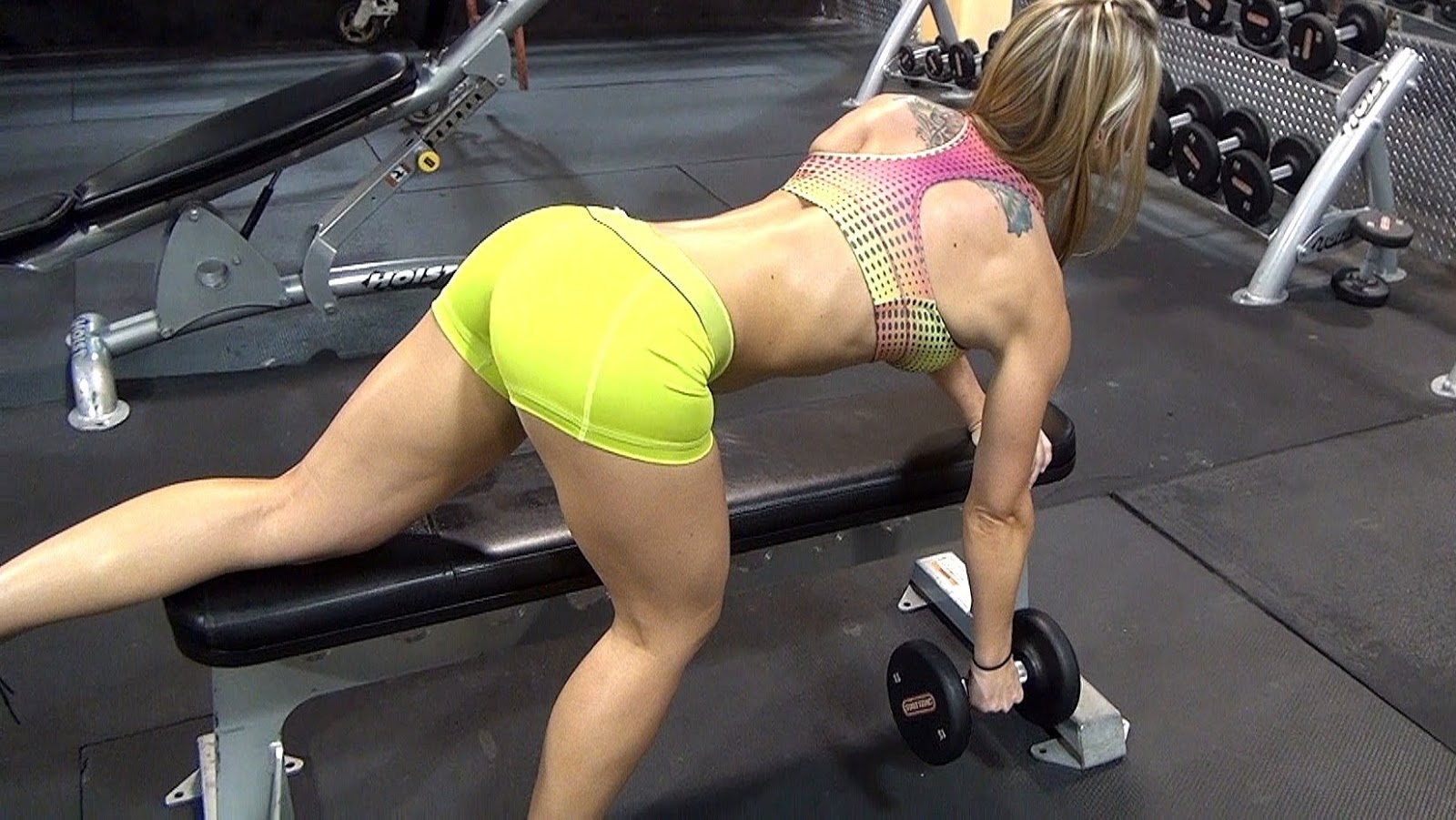
Check out the position of her supporting arm. Don't do that.

  1. Scapular retraction of the supporting arm. I mentioned this same concept on my post about perfecting the plank. Scapular retraction (when you pull the shoulder blades back), is a significantly less secure position than either scapular protraction (pushing the shoulders forward), or maintaining a neutral position somewhere in the middle. If you can see your entire shoulder blade, you're pulling from an unstable foundation.
  2. Kipping as you pull. Kipping is great for those who want to lift the most weight (for their own ego boosters), or individuals who are mostly focused on achieving more reps per set, but if you want to utilize the powerful latissimus dorsi muscles to their capacity, you're better off without it. If your main goal is strength, use a lighter weight, or do as many repetitions as you can perform with strict technique.
While the dumbbell row might seem like a pretty simple exercise, there are a lot of little nuances involved to achieve maximal contraction of the prime movers. Make these two easy fixes, and your friends and family will look at you and say "baby got back!"

Friday, July 10, 2015

Your Grip Strength is Limiting Your Other Lifts


Have you ever played that game at an arcade where you squeeze these metal handles as hard as you can and it determines how strong your grip is?

One of the most understated elements of training is, in my opinion, grip strength.

Whether you're gripping a baseball bat, holding onto the pull-up bar, or picking up a heavy deadlift, you need to have strong forearms.

I find it so unfortunate that many people use and abuse straps for their lifts. Yes, straps have their time and place, but as I've said before, I'm a minimalist when it comes to lifting. I believe the more you are able to learn to create tension, and the stronger you get, the better off you will be. You can deadlift more weight with straps, but you are using a crutch. If your forearms are the limiting factor in a deadlift, then maybe you just need to strengthen them!

The muscles in the forearms connect all the
way up to the neck and shoulders.
According to Thomas Myers's Anatomy Trains, the whole arm and shoulder functions under one fascial web. The fascia is a thin, protective layer of connective tissue that surrounds the muscles. When one part of this fascial web is activated, so too, is the rest of it. With this, we can deduce that a better grip on the bar will allow for a stronger press.

Let's take, for example, a strict press. This is a shoulder exercise, right? Well, yes, but that doesn't mean we don't need to recruit other muscles in the body! Creating tension from the feet, all the way up through the hands, will activate more muscle fibers, and thus, make the weight fly up faster! One cue in particular that helped me was to think about actively squeezing the barbell as hard as possible.

Charles Poliquin notes,
"when your grip strength improves, less neural drive is needed for the forearm and hand muscles to perform other exercises. That is why many trainees report breaking training plateaus in a host of lifts, ranging from dead lifts to curls, after doing a grip specialization routine."
All of the big lifts require you to create a tremendous amount of tension in your body. The "tighter" you get, the better. Any areas of weakness will make a lift that much more difficult. Strengthen your forearms, and you will be able to get a better grip on the bar, which can result in more weight. A+!

Aside from improving total body strength and motor control, training the forearms may prevent pain in the wrists and forearms.

"There are 35 muscles involved in movement of the forearm and hand, with many of these
involved in gripping activities," notes Jason Shea, CSCS. He then continues on to talk about how inadequate grip strength may result in injuries like tennis elbow, UCL tears, and other elbow and wrist-related issues. If the forearms are weak, you will place an unnecessary amount of stress on your tendons and ligaments around the elbow and wrist joints. Charles Poliquin also mentions that
"these ailments are often caused by improper strength ratios between the elbow muscles and the forearm muscles. If the elbow flexors, like the biceps and brachialis, are too strong for the forearm flexors, uneven tension accumulates in the soft tissue and results in elbow pain"
Therefore, if you're spending a ton of time strengthening the muscles in your upper arm (biceps, triceps, etc.), but minimal to no time strengthening the muscles downstream, you're setting yourself up for injury.

Additionally, some studies have linked rotator cuff health to the integrity of the forearm muscles. When your grip is activated, so too are the muscles of the rotator cuff (teres minor, infraspinatus, supraspinatus, and subscapularis).

You need to have some strong freaking forearms to pull that kind of weight!
Now, for the exercise portion! Here are eight of my favorite ways to make you a pro at grabbing things:
  1. Plate pinches
  2. Farmer carries (unilateral and bilateral)
  3. Plate flips
  4. Hangs from the pull-up bar (for an extra challenge, try unilateral)
  5. Rock climbing (no video necessary)
  6. Fat bar deadlifts or pull-ups
  7. Heavy kettlebell swings
  8. Finger board (used for climbers)
Note that grip strength is going to be positional, meaning that your forearms may be very strong holding a very small or narrow object, and weak holding thicker objects. It's important to vary the width of the equipment you use every once-in-a-while.

You may have noticed that wrist curls and extensions are absent from this list. I'm not much of a fan of training the grip in this way, because it has less of a carry-over to other activities. We want to train for function, not necessarily for size!

Now go find some heavy objects and grip them! Open pickle jars for your friends, or swing from branches like Tarzan. Build your forearms and reap the tremendous benefits from all of this newfound strength.